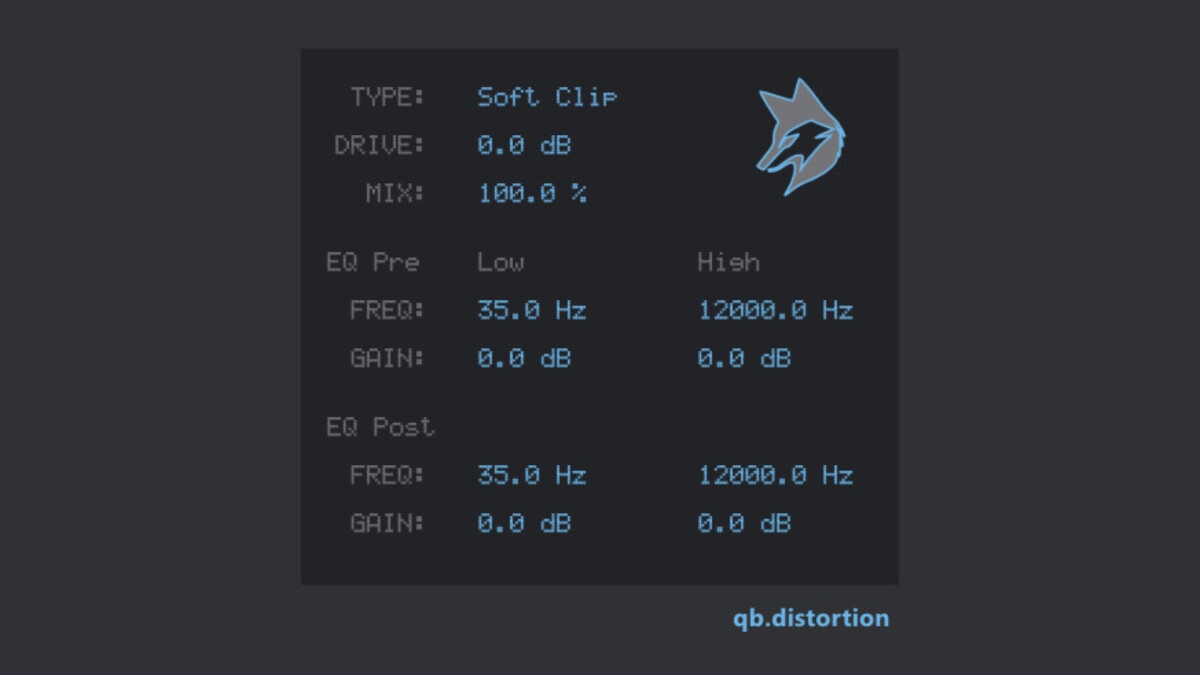
Le développeur présente Kyubi, un plug-in gratuit de distorsion multimode intégrant neuf algorithmes et un module d’égalisation… Lire la suite sur Audiofanzine
CRSSD Festival returns to the San Diego waterfront next month. We caught up with TOKiMONSTA, Zimmer90, Franc Moody & Vintage Culture for some insights into production and DJing.
The two‑day event will bring together an expansive roster spanning techno, house, indie‑electronic and crossover live acts – continuing CRSSD’s tradition of genre‑diverse curation.
Tickets are still available, but you’ll need to be quick. Sunday single-day tickets are 95% sold out, and weekend passes plus Saturday singles aren’t far behind.
Ahead of their performances, we caught up with four artists for a few quick-fire interviews.
Based at the Waterfront Park in San Diego CRSSD Festival runs over two days: March 14 and 15, 2026,
What is your all-time favourite bit of kit, and why?
The Roland SP-404 is definitely a classic « GOATed » piece of kit ». It’s not the most powerful piece of gear in the room, but it changed the way I thought about making beats in the earlier days. There’s something about hitting pads and hearing grit that reminds me why I started producing in the first place.
What one production technique do you wish you’d known when you were starting up?
Engineering… the technicalities of mixing down records. My early work has a very distinct sound that is iconic in its own way. But really, I didn’t fully understand gain staging, headroom, or how frequency balance really impacts how a track translates outside your bedroom. Yet that unawareness at the time also gave that work a lot of special character
What one DJing technique do you wish you’d known at the start of your career?
How to read energy, not just BPM. Technically, DJing isn’t very hard to learn. Understanding when to pivot genres, when to let a track breathe instead of mixing out quickly, that’s the deeper craft. I used to think playing the most interesting record was the goal. Now I know the goal is playing the right record for that exact moment while being patient for the right moment for that special record
What can we expect from your set at CRSSD Festival this year?
It will be a fun energy, but also a building journey. I’m less interested in shock value or sameness and more interested in taking people somewhere steadily and intentionally.
[quote align=right text= »Technically, DJing isn’t very hard to learn. Understanding when to pivot genres, when to let a track breathe instead of mixing out quickly, that’s the deeper craft »]
Zimmer90
What is your all-time favourite bit of kit, and why?
Our old Wurlitzer at home is probably the most essential thing because it’s where everything usually starts in its simplest form. We love the physical feeling of the keys – it’s less about the « gear » and more about how the instrument creates a space for us to just be intuitive and explore.
What one production technique do you wish you’d known when you were starting up?
We wish we had realized earlier that « less is more » and that you don’t need a million plugins to create a deep atmosphere. In the beginning, we tried to fill every gap, but now we know that giving a wide synth pad or a vocal enough room to breathe is what actually builds our universe.
What one DJing technique do you wish you’d known at the start of your career?
Coming from a live band background, we had to learn that it’s not just about playing the next track, but about creating a continuous flow with long, slow transitions. More like telling a story or moving through a journey. Using filters to gently blend frequencies is like painting; it allows the crowd to stay in the vibe without even noticing the music has changed.
What can we expect from your set at CRSSD Festival this year?
You can expect a journey that takes you to softer sections, but also more energetic and electronic parts. We love to play around with our tracks and play more technoid versions to keep everyone moving while still keeping those soft, dreamy moments.
Using filters to gently blend frequencies is like painting; it allows the crowd to stay in the vibe without even noticing the music has changed
[quote align=right text= »Using filters to gently blend frequencies is like painting; it allows the crowd to stay in the vibe without even noticing the music has changed »]
Vintage Culture
What is your all-time favourite bit of kit, and why?
I just received the new Pioneer Mixer – Euphonia. This is my new baby. What I love about it is how musical it feels. The rotary design forces you to think in terms of flow and dynamics instead of quick cuts, and the sound is incredibly warm and open. You really hear the depth in the low end and the detail in the mids, especially on longer blends.
It encourages patience — longer mixes, smoother transitions, more control over energy. For the kind of journeys I like to build now, it feels very natural, almost like playing an instrument rather than operating a machine.
What one production technique do you wish you’d known when you were starting up?
Arrangement and restraint.
Early on I thought more layers meant a better track, but the real lesson was learning what to remove. When the instrumental is clear and the emotion has space, everything hits harder. Now I’m very focused on structure, tension, and letting a record breathe instead of over-explaining the idea.
What one DJing technique do you wish you’d known at the start of your career?
Phrasing and patience.
It’s not about tricks or fast mixing – it’s about understanding when a track wants to change and giving the crowd time to feel it. Once I learned to trust longer blends and control energy instead of rushing peaks, my sets became more powerful and more consistent.
What can we expect from your set at CRSSD Festival this year?
A set built as a journey, not a checklist.
CRSSD crowds really listen. There’ll be unreleased music, deeper cuts, and moments designed specifically for that stage and that time — not a generic festival set. Can’t wait to see all my friends at CRSSD, it’s gonna be wild.
[quote align=right text= »When the instrumental is clear and the emotion has space, everything hits harder »]
Franc Moody
What is your all-time favourite bit of kit, and why?
It’s hard to pick! But either my Juno 60 or my C3 Hammond organ, but I’d probably have to pick the Juno if it came down to it. It oozes character and is so versatile, always adding colour and personality to a track. It’s never failed me! Ned and I call it the squit machine, as some of the bass noises you can get are so damn funky.
What one production technique do you wish you’d known when you were starting up?
Less is more. Avoiding cluttering up frequencies and making sure parts and sounds really own the space they’re in. A lot of this comes from making sure the sound and the idea is good at source, rather than over compensating with loads of effects and tricks to try and make something fit in. Still working on this!!
What one DJing technique do you wish you’d known at the start of your career?
When we first started I’d say I was lacking in nearly all of the requisite techniques required to become a competent DJ. I was very much a fish out of water. Working out how to load in my USB stick was trouble enough and mixing was nigh on impossible.
What can we expect from your set at CRSSD Festival this year?
We’ve reworked our set a fair amount since we were last over in the US at the end of 2025, adding in lots of songs we’ve never played before and rethinking the set as a whole. It’s given it a very fresh feel/lick of paint so really looking forward to bringing that energy to the CRSSD crowds!
Also be nice to see a few familiar faces in SD, as it’s become something of a home from home for us over the years!
[quote align=right text= »making sure the sound and the idea is good at source, rather than overcompensating with loads of effects and tricks to try and make something fit in. Still working on this!! »]
Australian telecommunications company Telstra has teamed up with electronic music group and fellow Aussies The Avalanches to create a fully functional synth from over 80% repurposed e-waste items like mobile phones, games consoles and old electronic cables.
The one-of-a-kind “e-waste” synth – created to raise awareness of the growing problem of e-waste in Australia – will be on display in the window of Telstra’s Melbourne Discovery Store through March and April.
In a blog post on Telstra’s website, the company describes the country’s “mounting” e-waste problem, noting that by 2030, it’s estimated the country will produce 657,000 tonnes of e-waste every year – roughly the weight of 12 Sydney Harbour bridges or 19,000 Melbourne trams.
Put simply, e-waste refers to old electronic items and devices that are no longer used, like broken or outdated mobile phones – and their accessories and chargers.
“Instead of tossing them in the trash, they need special recycling because they’re full of stuff that can harm the environment, but they also contain valuable materials we can reuse,” Telstra says.
The company says Australia’s e-waste problem is significantly worse than the global average, with around 20kg of e-waste produced per person per year, compared to the global average of 7kg.
The new synth comes as part of a wider initiative by Telstra, Second Life Sounds, which centres around its goal to reuse, recycle, repair or donate one smart device for every two devices sold by 2030.
“We wanted to show that e-waste can be repurposed into something that people can relate to universally,” says Robbie Chater of The Avalanches. “Through music, we have tried to demonstrate the amazing link between sustainability and creativity.”
You can learn more about the new one-of-a-kind “e-waste” synth at Telstra.
Strange Audio DSP has updated maniFold Omega, a hybrid real-time effect processor that blends real-time micro-looping, granular fx, spectral-style delay processing, and feedback-based textures, to v1.1.
New Features
Two New Playback Algorithms:
Butterfly — Each playhead now has a 50% chance of playing in reverse, introducing organic, unpredictable movement into your textures.
PRISMA — Reversed playheads with a 50% probability of transposing to the 5th. Enable Octave Jitter and that interval extends to 19 semitones for wide, shimmering harmonic clouds.
You will find new Playback Algos menu under Playback Control tab.
Direct Playhead-to-Buffer Feedback
Route playhead output directly back into the record buffer.
Self-generating textures, evolving drones, and feedback loops.
New Param RecBufferFdbck available from Settings section.
Drag & Drop Audio Files to Buffer
Drag audio files straight from your DAW browser into the maniFold Omega buffer. No bouncing, no importing.
Requires a DAW with VST3 file drag-and-drop support — if yours doesn’t, use the Load Buffer option in the Settings menu.
LFO Modulation Spread
A new LFO Spread parameter in the Settings section lets you offset the modulation phase across Delay network, adding width and movement to the stereo field.
New Param LFOSpread available from Settings section.
Integrated Limiter & Input Soft Clipper
A limiter and soft clipper are now built into the signal path, keeping things under control at high feedback and density settings.
Playhead Bounds
A new Bounds mode fades playheads out as they reach the end of the buffer — no more clicks at buffer boundaries.
New Param PlayHeadsBounds available from Settings section.
Preset Manager Relocated
The preset manager has moved out of the settings menu to the top center of the UI for faster access during sessions.
Bug Fixes
Fixed buffer state not saving in Ableton 12 on macOS.
Fixed crash on plugin close in Reason Studio on macOS.
40 years ago an idiosyncratic piece of software opened new doors for electronic music. Now Eventide has revitalised Spiegel’s classic Music Mouse instrument for a new generation
oeksound Soothe – a plugin that Skrillex once described as “so simple yet dynamic” – turns 10 this year. In that time, it’s gone from a niche problem-solver posted on Gearspace to a near-ubiquitous fixture in vocal chains, guitar buses and mastering sessions alike.
Originally developed by Finnish engineer and programmer Olli Keskinen, Soothe was born out of a desire to automate the painstaking, syllable-by-syllable EQ moves used by top mixing engineers.
Drawing on his background in digital signal processing, Keskinen designed Soothe as a dynamic resonance suppressor – similar to a de-esser or dynamic EQ, but far more adaptive in practice. Instead of applying static cuts, the plugin identifies problematic frequencies in real time and reduces them without flattening the surrounding tone, maintaining clarity.
As Keskinen explained in a 2017 interview, “Due to the chaotic radiation patterns of the instruments, and multiplied by the pickup patterns of the microphones, nastiness is likely to be present when sticking a microphone a few inches from a sound source. Soothe is at its best when used as the first line of defence to treat these problematic sound sources, saving the mixing engineer a lot of time and frustration trying to get the stuff to sit in the mix, especially with the lead parts.”
After gaining early traction on Gearspace, Soothe’s momentum accelerated when Grammy-winning producer Greg Wells – whose credits include Timbaland, Adele, and Katy Perry – publicly championed it.
“If the person praising you has clout, many people in our industry will start to believe in the product,” Keskinen later observed. “Wells did exactly what I developed the product for.”
For engineers deep in surgical EQ work, the appeal was obvious. Metal producer Dave Otero puts it bluntly: “I was already tackling this problem before Soothe came out, and spending too long doing these surgical cuts. And it’s just so much harder to do that when that task takes an hour. With Soothe, you can get there in the first one or two minutes.”
The 2020 release of Soothe2 refined the concept further, adding expanded controls while optimising CPU usage and latency. Mastering engineer Heba Kadry calls Soothe2 her “golden solution” because it “attenuates the issues while self-adjusting to whatever else is going on in the same frequency range sounds so natural” – even when working without access to stems or a multitrack.
Today, Soothe sits alongside pitch correction as one of those tools that has quietly embedded itself into modern workflows. And despite its near-ubiquity, oeksound says its focus hasn’t changed.
“Our mission is still the same as it was when oeksound was founded, even if our team is now bigger,” says Atte Karm, Marketing Director at oeksound. “We aim to create tools that solve real problems for audio professionals. Reliably good-sounding algorithms and an intuitive user interface are a must so that pros can work quickly, so they are deeply ingrained in our work.”
Le développeur publie chez United Plugins une nouvelle solution logicielle pour préparer le signal en amont du traitement dans la STAN… Lire la suite sur Audiofanzine
Les cordes Super Slinky de la marque américaine Ernie Ball ont été présentées en 1962. Elles sont rapidement devenues un standard et sont, encore de nos jours, très demandées par les guitaristes professionnels et amateurs. Voyons si ces cordes tiennent toutes leurs promesses en termes de son, performances et durabilité… Lire la suite sur Audiofanzine
De la musique et des infos sur la musique et l'audio