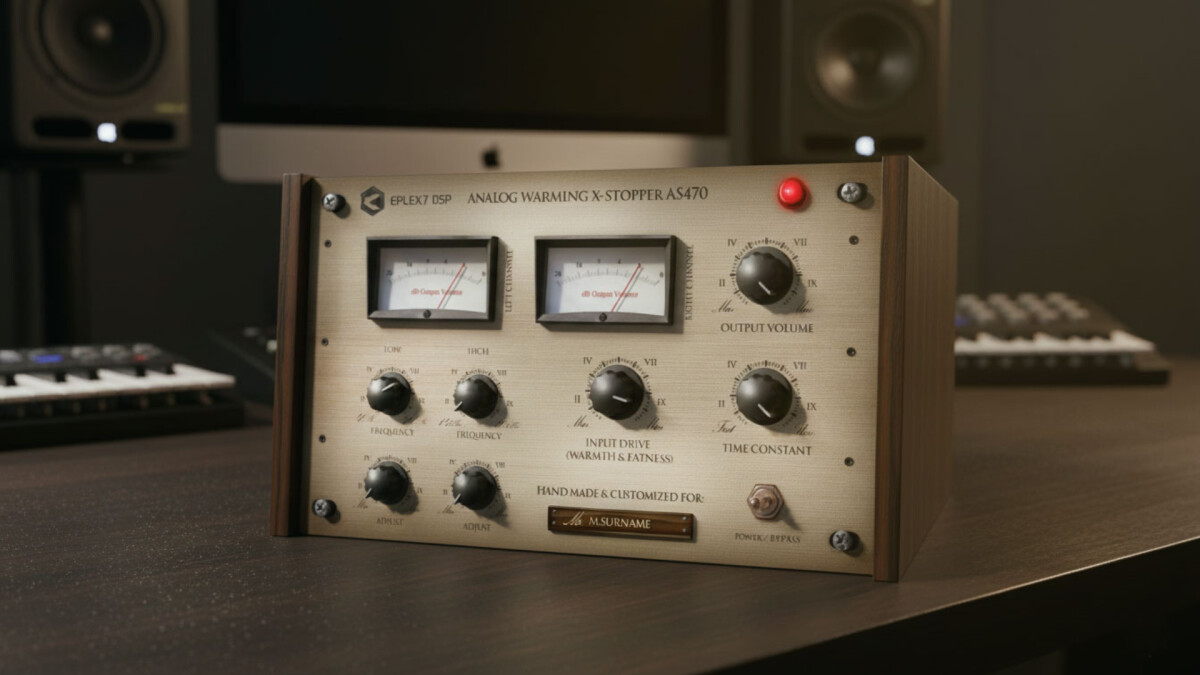
La marque dévoile l’Analog Warming X-Stopper AS470, un plug-in de compression et limitation à modélisation analogique non linéaire… Lire la suite sur Audiofanzine

La marque dévoile l’Analog Warming X-Stopper AS470, un plug-in de compression et limitation à modélisation analogique non linéaire… Lire la suite sur Audiofanzine
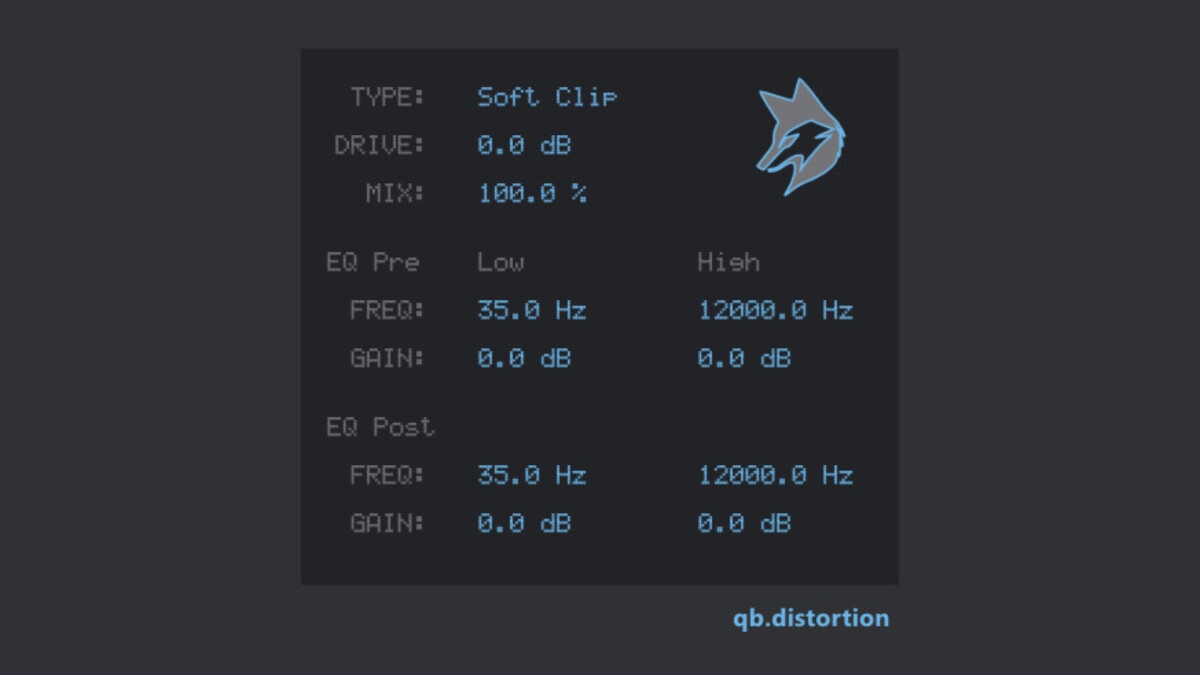
Le développeur présente Kyubi, un plug-in gratuit de distorsion multimode intégrant neuf algorithmes et un module d’égalisation… Lire la suite sur Audiofanzine
Analog Obsession has released RazorClip, an analog based clipper plugin.
Features:
RazorClip is free / donationware available in VST3, AU and AAX plugin formats for macOS and Windows.
UnitedPlugins has announced the release of FirePreamp, a new audio utility developed by FireSonic. Designed to serve as the initial step in a signal chain, the plugin aims to streamline the preprocessing stage of mixing by addressing gain staging, noise, and signal coloration in a single interface.
FirePreamp combines technical utility with analog-modeled saturation, allowing users to prepare audio tracks before applying further processing. The interface is built around the concept of solving technical issues—such as low-end rumble and noise—while simultaneously offering options for tonal shaping.
FirePreamp is compatible with VST, VST3, AU, and AAX formats on macOS and Windows.
It is available now for an introductory price of €12 (regularly €59) until the end of March 2026. A 15-day fully working trial version is available for download at the UnitedPlugins website.

Sync Audio’s latest release is a plug-in that’s capable of ‘snapping on’ to other plug-ins and kitting them out with a set of powerful modulation features.

Australian telecommunications company Telstra has teamed up with electronic music group and fellow Aussies The Avalanches to create a fully functional synth from over 80% repurposed e-waste items like mobile phones, games consoles and old electronic cables.
The one-of-a-kind “e-waste” synth – created to raise awareness of the growing problem of e-waste in Australia – will be on display in the window of Telstra’s Melbourne Discovery Store through March and April.
In a blog post on Telstra’s website, the company describes the country’s “mounting” e-waste problem, noting that by 2030, it’s estimated the country will produce 657,000 tonnes of e-waste every year – roughly the weight of 12 Sydney Harbour bridges or 19,000 Melbourne trams.
Put simply, e-waste refers to old electronic items and devices that are no longer used, like broken or outdated mobile phones – and their accessories and chargers.
“Instead of tossing them in the trash, they need special recycling because they’re full of stuff that can harm the environment, but they also contain valuable materials we can reuse,” Telstra says.
The company says Australia’s e-waste problem is significantly worse than the global average, with around 20kg of e-waste produced per person per year, compared to the global average of 7kg.
The new synth comes as part of a wider initiative by Telstra, Second Life Sounds, which centres around its goal to reuse, recycle, repair or donate one smart device for every two devices sold by 2030.
“We wanted to show that e-waste can be repurposed into something that people can relate to universally,” says Robbie Chater of The Avalanches. “Through music, we have tried to demonstrate the amazing link between sustainability and creativity.”
You can learn more about the new one-of-a-kind “e-waste” synth at Telstra.
The post This one-of-a-kind synth is made almost entirely of e-waste appeared first on MusicTech.

Les cordes Super Slinky de la marque américaine Ernie Ball ont été présentées en 1962. Elles sont rapidement devenues un standard et sont, encore de nos jours, très demandées par les guitaristes professionnels et amateurs. Voyons si ces cordes tiennent toutes leurs promesses en termes de son, performances et durabilité… Lire la suite sur Audiofanzine
Strange Audio DSP has updated maniFold Omega, a hybrid real-time effect processor that blends real-time micro-looping, granular fx, spectral-style delay processing, and feedback-based textures, to v1.1.
40 years ago an idiosyncratic piece of software opened new doors for electronic music. Now Eventide has revitalised Spiegel’s classic Music Mouse instrument for a new generation

oeksound Soothe – a plugin that Skrillex once described as “so simple yet dynamic” – turns 10 this year. In that time, it’s gone from a niche problem-solver posted on Gearspace to a near-ubiquitous fixture in vocal chains, guitar buses and mastering sessions alike.
Originally developed by Finnish engineer and programmer Olli Keskinen, Soothe was born out of a desire to automate the painstaking, syllable-by-syllable EQ moves used by top mixing engineers.
Drawing on his background in digital signal processing, Keskinen designed Soothe as a dynamic resonance suppressor – similar to a de-esser or dynamic EQ, but far more adaptive in practice. Instead of applying static cuts, the plugin identifies problematic frequencies in real time and reduces them without flattening the surrounding tone, maintaining clarity.
As Keskinen explained in a 2017 interview, “Due to the chaotic radiation patterns of the instruments, and multiplied by the pickup patterns of the microphones, nastiness is likely to be present when sticking a microphone a few inches from a sound source. Soothe is at its best when used as the first line of defence to treat these problematic sound sources, saving the mixing engineer a lot of time and frustration trying to get the stuff to sit in the mix, especially with the lead parts.”
After gaining early traction on Gearspace, Soothe’s momentum accelerated when Grammy-winning producer Greg Wells – whose credits include Timbaland, Adele, and Katy Perry – publicly championed it.
“If the person praising you has clout, many people in our industry will start to believe in the product,” Keskinen later observed. “Wells did exactly what I developed the product for.”
For engineers deep in surgical EQ work, the appeal was obvious. Metal producer Dave Otero puts it bluntly: “I was already tackling this problem before Soothe came out, and spending too long doing these surgical cuts. And it’s just so much harder to do that when that task takes an hour. With Soothe, you can get there in the first one or two minutes.”
The 2020 release of Soothe2 refined the concept further, adding expanded controls while optimising CPU usage and latency. Mastering engineer Heba Kadry calls Soothe2 her “golden solution” because it “attenuates the issues while self-adjusting to whatever else is going on in the same frequency range sounds so natural” – even when working without access to stems or a multitrack.
Today, Soothe sits alongside pitch correction as one of those tools that has quietly embedded itself into modern workflows. And despite its near-ubiquity, oeksound says its focus hasn’t changed.
“Our mission is still the same as it was when oeksound was founded, even if our team is now bigger,” says Atte Karm, Marketing Director at oeksound. “We aim to create tools that solve real problems for audio professionals. Reliably good-sounding algorithms and an intuitive user interface are a must so that pros can work quickly, so they are deeply ingrained in our work.”
The company has since released other plugins including Soothe Live, which adapts the resonance suppression concept for live use; Bloom, an “adaptive tone shaper”; and Spiff, an “adaptive transient processor” that lets you cut or boost transients with great detail.
Learn more at oeksound.
The post Celebrating 10 years of oeksound Soothe, the plugin Skrillex calls “so simple yet dynamic” appeared first on MusicTech.

